Sunday, March 8, 2020

Second Sunday in Ordinary Time, cycle A


Matthew 17:1 - 9
I envy the Saints. Not so much because they are in heaven, where I hope to be someday, but because while they lived on earth, God seemed to treat them differently than he treats me. Sure, some got martyred and others spent their lives fasting and wearing hair shirts; that doesn’t sound like much fun. But some of those and some others had moments of direct encounter with God. Saint Francis heard God tell him to rebuild his church. Saint Bernadette and Saint Juan Diego and several other saints got to speak directly to the Blessed Mother. Saint Joan of Arc was on intimate terms with the Archangel Michael. And I look back on my life, and I may have had one experience that even approached anything like this. I was making a private retreat, trying to figure out what God wanted me to do with my life. As I knelt beside my bed praying, I heard inside my head the words, “Whatever you choose to do, I’ll love you and help you”. And at that moment all my uncertainty and inner turmoil disappeared. Was that God or wishful thinking? I can’t tell.
So we can envy Peter and James and John who were given the inestimable privilege of seeing Jesus transfigured there on the mountaintop, seeing him speaking with the giver of the law, Moses, and the greatest of prophets, Elijah. Hearing the voice of God the Father as well. This was so devastating that they collapsed on the ground, paralyzed, relieved only when Jesus touched them and told them in the same words he used to raise Peter’s mother in law, to bring the little girl to life, “Get up”. And everything seemed back to normal.
Some people say that the transfiguration strengthened Peter, James and John for the trial they would soon be put through -- the terrible death of Jesus. But I have two problems with this theory. One is that it didn’t seem to work, because they along with the other apostles went and hid. The second is that when Jesus returned from the dead, that’s when they took courage and began to believe. Why the transfiguration?
I’ve met a few people in my life who insist that they have the experience of God speaking to them all the time. I’ve met a few Pentecostals and Charismatics who almost measure their progress in holiness by how many vivid experiences of the Spirit they have had. Sometimes it almost seems like an addiction. I’ve met a few Catholics that get a high from traveling to holy places; they have special experiences when they are in Medjugorje or Lourdes or the Holy Land. I envy them as well. I wish I could have such experiences.
But I see Peter up there on the mountain -- “Let us build three tents” he says, or three booths, or three dwellings -- clearly Peter wants to prolong the moment, wants to have Jesus and the two great leaders of the Jewish people stick around a while in their transfigured state. But after the earth-shattering voice from heaven and the cloud that comes down, they see only the Jesus who has been their teacher, their fellow traveler, their friend -- and they have to descend from the mountain.
The challenge, you see, is not primarily to seek out those moments when God seems especially near, but rather, to find God in the ordinary moments. Because He is here, he is present. As the poet Hopkins pointed out, “The word is charged with the grandeur of God. It will flame out, like shining from shook foil. It gathers to a greatness like the ooze of oil crushed”.
And I think we learn that from the saints as well. Francis had the mystical insight to see that there was a connectedness in all of nature, even including people, so much so that he could call animals his brothers. Francis de Sales saw something of Jesus in even his protestant opponents, and wrote eloquently of finding God in ordinary life, in the little things we do, the work we toil at every day.
And perhaps an even greater challenge is to find God in suffering and death. I don’t think it’s a coincidence that Matthew has Jesus transfigured on a mountaintop between two of the greatest of his ancestors and in a little while he is hanging on a cross between two thieves. On the mountaintop his disciples want to remain with him; at the cross they run and hide. On the mountaintop the Father himself declares that Jesus is the beloved son; on the cross it’s a roman centurion -- not an apostle, not a disciple, but a pagan -- who says “Truly this was the Son of God!”.
William James, the psychologist, said that there are people that seem built to have mystical experiences, and others who can’t or have them really infrequently. And sometimes it's related to aging. I knew an elderly nun who had gone into the convent because of a mystical experience -- and she had no others after that. She knew she had made the right choice in life, but she always missed that moment of intimacy with God.
But all of us can find God in the ordinary. So this lent, as winter turns into spring, try to see God in ordinary life, in nature, in other people; and once you become more able to do this, you will find the authentic life-long experience of God.

Sunday, March 1, 2020

First Sunday of Lent, cycle A

Matthew 4:1 - 11
You can never tell what a person really feels like inside, but if the inside is anything like the outside, my ten year old grandson has a well developed sense of who he is.  He isn't at all shy, and will engage anyone in conversation, and hold his own.  Even though he is the youngest of five boys, he hasn’t got a trace of an inferiority complex.  He goes door to door to his neighbors to see if they might have a dog that he could walk, for a fee of course; he’s an entrepreneur..  It’s a good thing to know who you are, to be comfortable in your own skin, as they say.  And a lot of us aren’t.  We worry about how we look, about making mistakes in the way we speak, about being looked down on by people we respect.  There are whole sections of book stores devoted to helping us get to know ourselves better.
The gospel we’ve just heard is sometimes seen as an example of how clever Jesus is, as he matches the devil quote for quote, from scripture.  It’s also sometimes seen as a model for how we should resist temptation.  But remember, just before going out into the desert Jesus was being baptized, and heard the voice of the Father saying, “This is my beloved Son in whom I am well pleased.”:  And that is the real temptation Jesus faces.
If you are God’s beloved son, why are you hungry?  God wouldn't want his son to starve, would he?  Change these stones into bread.
If you are God’s beloved son, what are you doing out in the desert?  Show the world that you are His son, jump off that tower and let the angels catch you.  After all, God wouldn’t let anything happen to his beloved Son, right?
If you are God’s beloved son, take your rightful place and rule over the world.  That’s what God would want for his son, right?  And I can make it happen, just ask. 
In other words, Jesus is being tempted just like Adam and Eve were tempted.  If you are really God’s friends, if he really created you in his image and likeness, why did he tell you not to eat the fruit of that tree?  I bet he’s afraid you will become gods like Him. 
Our sense of self is fragile; most of us can think of a lot of things about us we’d like to change.  I could stand growing some hair on my head.  More seriously, I don’t really like getting old and knowing that there is much less life ahead of me than behind me.  I don’t like losing loved ones or being separated from my children and grandchildren.  And I really don’t like the fact that I keep confessing the same things every time I receive the sacrament of reconciliation. And you probably can think of a lot of things in your own life that you wish were different, that threaten your sense of self. 
But here’s the thing.  When God told Jesus that he was His beloved son, Jesus hadn’t really done anything except be baptized.  And when God gave Adam and Eve life, when He created them in his own image, when he gave them each other and Paradise to live in, They hadn’t really done anything to deserve all this.  And when we are baptized, whether as babies or adults, we haven't done anything to deserve what we become, which is to become a son or daughter of God the Father.  And at that moment he says to us, as he said to JEsus, and probably to Adam and Eve, “You are my beloved, in whom I am well pleased.”
But from that moment on, the world, the devil, and even our own minds and bodies begin to question that. If I am God’s beloved, why am I living paycheck to paycheck?  If I am God’s beloved, why did He take my husband, my wife, my child, my parents from me?  If I am God’s beloved,  why do I have chronic pain that no doctor seems to be able to do anything about? 
And even Jesus, there for a moment on the cross, seemed to say, “If I am God’s beloved, why has God forsaken me?”  And of course, moments later, Jesus knows that even death can’t change the fact that He is God’s beloved: “Father”, he says, because he is God’s Son, “into your hands I commend my spirit.” 
On this first Sunday of Lent, let us recognize that despite everything, despite our failure, our sins, our shaky sense of self, we remain God’s beloved son, His beloved daughter; and that doesn’t change even if we decide we want nothing to do with Him.  When Adam and Eve left the garden, lost their Paradise, it says in the book of Genesis that God himself made clothing for them.  Justice demanded that they become mortal, that they take on all the failings of being human.  Mercy gave them clothing to wear; Mercy sent a savior, because they remained God’s beloved son and daughter.  And so do we, every day, every hour.

Sunday, February 23, 2020

Seventh Sunday in Ordinary Time, cycle A


Matthew 5:38 - 48
“Do not resist an evil person. If anyone slaps you on the right cheek, turn to them the other cheek also… Love your enemies and pray for those who persecute you. Be perfect as your heavenly Father is perfect. Nice sentiments, but could you ever find human beings who actually tried to carry out these commands of Jesus? As it turns out, you can.
At the time Jesus died on the Cross, the number of Christians in the world would probably be less than 50. Historians estimate that by 150 AD, there were about 40,000. By 200 AD, there were 218,000, and by 250 AD, 1.17 million. And all this was going on before Constantine, despite persecution, despite other economic and social pressures. There were competing religions as well; Roman and Greek paganism was given lip service, but Mithraism from Persia was attractive especially to members of the Roman army. Manicheism, a relative of Zoroastrianism, was popular among intellectuals, and for a time St.Augustine practiced this religion. And Judaism was growing as well; there was an active missionary effort in those days and Jesus even referred to it when he talked about the Pharisees crossing the ocean to make a single convert.
But the massive growth of Christianity was unique. And perhaps the major reason was that you could see how Christian communities behaved. They followed Jesus’ teachings. They took care of each other, and even their enemies. If you were a starving pagan, you knew you could get a meal from the Christians. If you were sick or in prison, Christians would be there doing what they could. This is all well documented in the writings of people of that time who weren’t Christian. Sometimes they looked down on Christians as weak, lacking in the virtues you would expect of good Romans. Other writers spoke favorably, but the fact remains that those early Christians were not like we are.
And of course there is the testimony of martyrdom. Christians embraced it, because they saw themselves following in the footsteps of Jesus. But they were martyred in other ways as well. If you were a Christian, you might spend a lot of time in jail. There were numerous jobs you couldn’t have. And yet people converted; more and more were added to the ranks of Christianity.
There really isn’t anything comparable in history. Islam was spread by the sword, and still is, in a way. Buddhist missionaries were welcomed by rulers who saw this faith as a way to unify their subjects. And we’ve seen nothing like the growth of Christianity.
And it’s interesting to note that when Christianity became the official faith of the Roman empire, the monastic movement attracted large numbers of men and women; and when the Europe of Saint Francis time was corrupt, the Franciscan movement grew very rapidly. And we see that over and over again; there is something wonderfully attractive about people who genuinely live the values that Jesus taught, and it is the only way real Christianity spreads.
But can we be perfect as our heavenly Father is perfect? Jesus seems to think so, and he points to a characteristic of the Father that bears thinking about: “He makes the sun to rise on the evil and the good, and the rain to fall on the just and unjust alike.” So why does the Father do that? He doesn’t condition his gifts on whether we are good or bad; he gives freely to all his creation out of sheer love. He expects nothing in return. He is pleased, if we can think of God as having moods, by whatever small token of love we can offer. He wants all his children, who he created in his own image and likeness, to live in perpetual joy with him. And if this is the way the Father is, it should be the way we are as well. Jesus is not expecting the impossible; when he calls us to repentance, he isn’t asking us to be sorry for our sins, precisely. He wants us to get rid of those attitudes that ask how far we can go without committing serious sin, those attitudes that are content as long as we can convince ourselves that we are better than someone else. Lovers never ask what the minimum requirement is to show the beloved that they are loved. In a way JEsus is asking us to put aside the ten commandments which put a floor under us, and turning our attention to the possibilities of how high we can go.
And I think Jesus knows that there will be a vast number of his followers who are trying to get by, who don’t give religion a lot of thought, who really aren’t changing much over the years. And they will be saved, we hope, because Jesus wants that. But every now and then a Benedict or a Francis or a Theresa will come along and live the Sermon on the Mount, and we will all be astounded and make a resolution to try a little harder. And the world will move a little closer to becoming the Kingdom of Heaven.

Sunday, February 16, 2020

Sixth Sunday in Ordinary Time, cycle A

Matthew 5:17 - 37
When I was in grade school, I remember having attacks of scruples.  That probably doesn’t happen anymore in our permissive society.  But as I learned more and more about my faith in my Catholic school, I began to view God as someone who was just waiting for me to make a misstep, at which point he would zap me.  This problem  became severe when I was preparing for confession:  I fought with my sister five times -- or was it six?  If I don’t get this right, I will make a bad confession, and that is a really serious sin; and if I make a bad confession but don’t know about it and go to communion, that will be a mortal sin as well … and my mind would go on and on as I examined my conscience.  In other words, if I wanted God to love me and bring me to heaven, I had to be a very very good boy.
But we know that’s not a true picture of God, right?  Although when you hear today’s gospel and next weeks, you might think someone forgot to tell Jesus.  This part of the gospel of Matthew is referred to as the six “antitheses” -- four today, two next week.  Each starts out with Jesus saying “You have heard it said … But I say…) and each time he seems to paint a picture of a very harsh God who is going to treat calling someone a fool the same as killing someone in cold blood. 
But I think we can get a different perspective. First of all, Jesus is addressing his followers and not the world in general.  And he is addressing them as a community, the beloved community that will usher in the Kingdom of Heaven, that will show the world a radical and wonderful new way to live; a community which will be the beacon calling all people to take part. 
If you look at it this way, the God who is revealed is not sitting up there with a lightning bolt ready to zap us.  The God who speaks to us here cares profoundly about the relationships between people.  Murder is terrible, a horrible sin.  But what about behavior that estranges people, that destroys the bond that should exist in the beloved community -- like the one Jesus wants to form, like the one that this parish family is supposed to mirror?  When anger, or calling someone a bad name, or belittling someone drives a wedge between you and someone else, for God that is very serious.  That’s why Jesus says it’s more important to heal that division than to even worship in the temple.  Relationships are a big deal to God. 

The same is true of the other sins named; adultery ruptures the relationship between a married couple; divorce does that and even more, considering all those affected.  And when Jesus talks about oaths, he is really referring to the common practice in those days of swearing by something sacred that what you said was true.  It happened in the marketplace a lot and in courts of law.  It’s sort of like when my kids were young and came to me to decide who was right and who was wrong -- I think they thought that the louder you shouted the more likely you were right.  And in the world of advertising isn’t it the case that they try to persuade you of the quality of a product because someone famous endorses it? Or in politics, where you are confronted with promises you know will not be kept in order to persuade you to elect someone?  In the beloved community everyone simply speaks the truth, because lies and equivocations harm relationships.
But what about all the terrible consequences Jesus mentions?  The Pharisees had a practice called “putting a fence around the Torah” .  This meant that they would take a law like “you cannot boil a goat in its mother’s milk” which is right there in the Old Testament for reasons I doubt anyone knows today.  After much thought and argumentation, that would lead to “you can’t serve dairy and meat at the same meal, and maybe you shouldn’t even use the same dishes.”  Modern Jews who follow these rules today do so because they see following the law as a wonderful way to worship God -- it doesn’t matter if the law doesn’t make sense -- God gave it.  We Christians have other ways to worship God.  But Jesus is sort of mocking the Pharisees.  They would argue about how far you could walk on the sabbath day before you broke the commandment forbidding “work”.  They would classify sins against the commandment “Thou shalt not kill” by how severe the penalty was -- if you stoned a woman for adultery or a man for blasphemy, that was ok; there were different penalties for killing your slave versus your fellow citizen.  So Jesus is basically saying with his exaggerations that it’s all serious; in the beloved community everyone works toward perfection; we don’t consider how much we can get away with. 
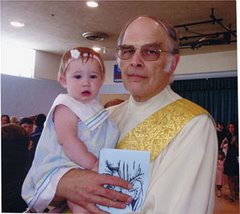
It’s worth asking today, just as we are about to begin Lent, am I working to heal broken relationships? Am I growing in virtue through my relationships?  Are my friends and family members growing in virtue because of me?  Because I am part of the beloved community. 

Sunday, February 9, 2020

Fifth Sunday in Ordinary Time, cycle A

Matthew 5:13 - 16
There was a very insightful article recently by the New York Times columnist David Brooks. He talked about the fact that there are two extremes; in one, it’s rugged individualism, the idea that every man is for himself. If you get to be a billionaire by climbing over other people, that’s fine. If you are starving on the streets, it’s probably your own fault, but certainly no concern of mine. It’s everyone for himself or herself. This individualism is behind the rise in suicide and drug addiction and the epidemic of loneliness we see in so many so called “advanced” societies. The other extreme is tribalism. It's the idea that you belong to a group that thinks alike, acts alike, and sees every other tribe as a potential enemy that should be wiped out. It’s like being part of an ant colony. Life is war, and the worst thing that can happen is for you to be ejected from your tribe. This certainly characterizes our politics these days, and it’s an attitude that’s encouraged by the internet, where you can find support for your own ideas without ever having to consider whether they might be wrong.
Brooks points out that these two extremes have one thing in common -- they make people miserable. It turns out, however, that we are social animals, meant to cooperate with each other. And when we are doing that, there are all kinds of hormonal changes in your brain that make you feel better. There was a time when the American flag was a symbol of the underlying unity among Americans, regardless of their political differences. Now of course, even the flag is seen as divisive.
If we hadn't celebrated the feast of the presentation last Sunday we would have heard the gospel for the fourth Sunday in Ordinary Time, in which Jesus gives us the eight beatitudes. You remember, “Blessed are the poor in spirit, Blessed are the merciful … “ and so on. A better translation of the Greek is the word “happy” or “most fortunate”. Jesus gives us the way to be happy – and it isn't individualism and it isn't tribalism.
Today Jesus tells us that we are the salt of the earth. He doesn’t say “we should be” or “we are becoming” -- we are right now. There is no way we can exist and not be. Salt is essential for human life, but too much in your blood will kill you just as quickly as too little. And salt is important in food -- but too little leaves the food tasteless, and too much makes the food taste terrible. Salt is best when it is just right, where it is almost ignored because it is doing its job. When we are salt, we recognize that our goal is to work for the common good in the best way we can, rather than our own. Happy are the meek.
Jesus tells us we are the light of the world. We are not expected to hide our light, but it should shine where the whole world can see it. Light is meant to be shared, to eliminate the dark places. Almost the opposite of salt, right? But I think Jesus wants his followers to live conscious of the fact that they are being watched -- by children, other adults; by Christians and non-Christians alike.
This gospel passage is part of the sermon on the mount. Jesus had just finished giving us the eight beatitudes -- kind of like the ten commandments for the Kingdom of Heaven. Matthew is very interested in telling the story of Jesus so that it will encourage the churches that are composed of and being persecuted by both Jews and gentiles. And he is saying that if we in our churches live as Jesus teaches, we will not only be happy and blessed, but we will begin to make over the world.
And that brings us back to the article by David Brooks. It isn’t rocket science to point out that people are generally happier when they are working cooperatively toward a common goal. That’s one of the things that churches are supposed to be -- places where people can cooperate in acts of charity and spreading the gospel -- kind of a super family. Our churches are obviously places of worship, where the community prays and receives the sacraments. Our parishes are also meant to help form us into disciples of Jesus Christ. But do we ever consciously set out to give the world an example of a way to live, a way that leads to true happiness, a way that makes the world a better place?
In our parish we have a few such efforts -- Food for the Soul, the Knights of Columbus, the St. Mary’s guild. Periodically throughout the year we raise money for good causes. But you and I know that most of these efforts are carried out by a small fraction of our parishioners. Maybe as we ask ourselves how we are being salt and light, we might ask whether there is some activity we could devote an hour or so to every week.
Make no mistake, Jesus tells us that we have a mission, a mission which he will later on compare to leaven as well. Salt, light, leaven; he wants us to show the world that there is a better way, there is a way to escape individualism and tribalism, and be happy rather than angry or fearful. The kingdom of Heaven is the answer to the world’s problems, and you and I are the ones to whom it has been entrusted. Like it or not, we are the salt, we are the light, we are the world's only hope.

Sunday, February 2, 2020

The Presentation of the Lord


Luke 2:22 – 40
Today is Superbowl Sunday and many of us will be celebrating this unique American holiday by eating salty foods, drinking beer, and screaming at the television set. To our surprise, we were recently contacted by one of our children, who offered to get us a flat screen television and even install it for us in time to watch the Supeerbowl. I didn't have the heart to tell her that we probably wouldn't watch the superbowl. And as for the flat screen tv...
We bought a new television set 36 years ago when we moved here. It still works, and I had it all rigged up to do everything I wanted it to do, although I don’t have any vcr tapes anymore and precious few dvd’s. We don’t watch the news and any entertainment comes from netflix. Our antique television set annoys our children. Which of course is another reason to keep it. My wife and I have different temperaments; she doesn’t like change and I don’t like to replace something that’s working, so we said no, not now.
But it got me thinking. What do we do with gifts? We’ve given and received many gifts down through the years, and many of them have gone unused. They were accepted with thanks, but weren’t things we used and so gathered dust.
Some gifts are forced upon you. My daughters many years ago decided their mother would be lonely without them so they bought her a parakeet. My wife was re-learning the organ in those days and the parakeet either thought it could sing along or was protesting. But my wife was happy when the parakeet lived out its short life span.
And there are those people that if you give them a gift, they feel obligated to give you something back that is worth more. My in-laws were like that.
The feast of the presentation which we celebrate today is all about the greatest gift of all. As per custom, Mary and Joseph are giving back to God the gift they have received -- their first-born son. The average couple would have then symbolically offered a couple of birds or if they were well off, an animal, and then would have taken the child back. This was recognition that the child came from God. But the difference here is that someone places the child in the arms of Simeon, who is a symbol for the righteous people of Israel, the people who have been waiting. And Simeon recognizes the gift that is the child. Luke turns our attention to Anna as well. Her age, her seven year marriage, the tribe she came from and her father’s name all are heavy with symbolism, but we don’t have time for that here. Anna is a symbol of the rest of humanity who have been waiting for Israel to lead them out of the darkness. And these two elderly people accept the gift of the child with joy.
There are times, I think, that we don’t fully appreciate our Lord as a gift. Sometimes we flat out refuse the gift; we don’t want to have to change our ways; to accept Jesus fully is a commitment. There are times when we make an effort to accept the Son of God into our lives, but eventually we find ourselves going through the motions in our religious practices; we even sometimes wish that we could be like our neighbors who have no faith and yet seem happy. And there are times when we don’t treat God’s Son as a gift at all. We have the attitude that unless we meet the standards, unless we do good works and lead sinless lives, we won’t get the gift; we feel as though God is asking a quid pro quo, to use a term that has been in the news a lot.
But the truth is that the gift of God’s Son to humanity is a gift without strings, a gift given to make us happy forever, a gift that we only have to accept.
When you think about it, every Mass acts out exactly what God does for us. We take ordinary bread and wine, and through God’s power it becomes the real presence of His Son. We offer this gift to the Father because we can offer nothing greater; and he gives it right back to us as food for body and soul.
Today on the feast of the Presentation let us be filled with gratitude that we have been given God’s son because the Father loves us so much and wants nothing from us but that we love him back. And let us resolve to spend our lives loving him back.

Sunday, January 19, 2020

Second Sunday of Ordinary Time, cycle A


John 1:29 - 34
Have you ever asked “Why am I a Catholic Christian?” Most of us would say, we were born into a Catholic family. But every one of us probably knows many people who were born into Catholic families who have left the Church, who don’t consider themselves Catholics anymore. Some believe in nothing; some have joined the Assembly of God across the river, which has a sizable population of former Catholics; and some have drifted into other religions, other denominations. So being born into a Catholic family doesn’t cut it. Some of us would say that it’s because being a Catholic is the best way to come into a relationship with Jesus -- but that assumes we want such a relationship, which in turn means that somewhere along the line we decided that was better than not having a relationship; we experienced the testimony of someone else. I grew up in a Catholic family. My mom and dad were serious Catholics. I think we all expect our mothers to be religious, but my dad was as well, and that's been shown to be a predictor of whether the children will remain in the church. He went to confession; he sometimes went to Mass on weekdays in addition to Sundays. He was a knight of Columbus; and he knew why he believed and could tell us kids why. His testimony and a major effect on me. When I look back on my life, I can see how every now and then someone would testify, and I would be influenced.
Somewhere between grade school and college most of us go through a transition between our childhood faith and an adult faith. This is a very dangerous time, because many never make the transition, or lose their faith. At that time they especially need testimony. When I went to college I remember one professor who was kind of famous because he had been one of the scientists who worked on the development of the atom bomb. He was brilliant and knew physics backward and forward. And he went to mass daily. And during my internship one of my teachers was a cardiologist -- and we all knew where to grab him for a consultation -- outside the hospital chapel after morning mass. These people testified to the importance of their Catholic faith..
So if you put all the accounts of Jesus’ baptism together with this post-baptismal account in the gospel of John, the sequence is like this: First, God himself testifies -- This is my beloved son, in whom I am well pleased.” then Satan testifies, in a way, by trying to tempt Jesus away from his mission; and finally, John testifies to his divinity as well as his role in our salvation.
Each one of us is a Christian because of someone else’s testimony. It may have been a parent or grandparent, a teacher or a priest. It may have been a good friend. But had they not testified, we would not be Christians. And if no one testifies, there will soon be no Church.
It’s interesting that John tells us twice, “I did not know him, but…” And we all say, “What do you mean? He’s your cousin. '' But John did not know him as the Lamb of God, as the Son of God, until the event of his baptism and times afterward. And even when John was in prison, he wasn't sure; he told his disciples to go and ask, “Are you the one who is to come, or shall we look for another?” John identifies why we do not testify -- we are not certain. But John still testified. Because if no one testifies, there will be no church.
So we need to ask, how are we testifying? Testifying means that we make known to others that Jesus means something in my life. For Catholics we find Jesus in the Church, his body extended through time and space. I think a lot of us fall back on the idea that if we live good lives, if we are generous, if we help our neighbor, we are testifying. But to testify means that the person to whom we testify knows that Jesus is the reason for our actions and that we find Him best in our Church. If he does not know this, he won’t turn to Jesus, he won’t have a chance to enter into that relationship which is his only hope of fulfilling his humanity, of reaching his true goal in eternity.
We need to tell people that we actually believe what Jesus teaches; that Jesus is the reason for the good we do. It’s definitely hard in our culture. It’s hard to say, “God Bless You” instead of “goodbye” when we leave a friend. It’s hard to make the sign of the cross and say grace before you eat in public. It's hard to offer to pray with someone who is ill or in trouble. But we need to show that our faith is behind our actions, because if no one testifies, there will be no church.
Last Friday we celebrated the feast of Saint Anthony of the Desert, who lived about 300 years after the birth of Christ. Anthony was a rich young man who heard the words “If you would be perfect, go sell all your possessions, and give to the poor, and you will have treasure in heaven; then come and follow me.” Anthony did that and went out in the desert by himself. But his testimony was so effective that soon he was surrounded by others who wanted to imitate him and learn from him.
And that’s what testimony is all about. We have to live in a way that people will see us and want to imitate us -- especially important for our children, our close friends, our spouses. And we have to do it so that others see that it is our faith that moves us, and our faith comes from our Catholic identity. And it’s never easy, but the more we realize that we are here to testify, the more we practice testifying, the easier it will become and the more fruitful it will be. Because if no one testifies, then there will be no church.