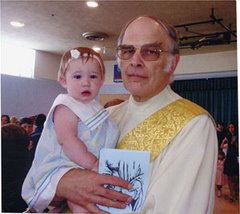
Sunday, March 28, 2021

Palm Sunday cycle B 2021

Mark 11:1 – 10, 14:1 – 15 ;47

There’s a lot to digest in the gospel readings today.  You notice that our readings more or less began with Jesus triumphantly entering Jerusalem, and ending with his horrible death on the cross.  And in a way, that reflects part of the journey of faith, a journey that ends in Resurrection, but on the way, there are moments of trump and moments of deepest doubt.  

Think of Peter -- Jesus some time ago designated him as the one who would be the rock of the Church.  Peter was one of the first called to be an apostle.  He had emerged as the spokesman for the apostles, and indeed the leader.  And now it seemed as though the fact that he had left all to follow Jesus was finally being vindicated.  As they entered Jerusalem, the crowds were wild.  They were greeting Jesus like a conquering hero.  Jesus wasn’t the first person to be welcomed with palms and clokes thrown on the floor.  That was indeed the way a general who had won a great victory was welcomed.  And Peter basked in the glow, his faith certain.  

And at the last supper, when Jesus predicted that his disciples would abandon him, he was the first to insist that even if everyone else left him, he would never leave him.  Peter’s faith was strong.  

And then Peter falls asleep in the garden of Gethsemane, not once, but three times, if we are to believe the gospel story.  It’s a hint of what is to come.  Peter’s strong faith isn’t enough to keep his eyes open.  Don’t you feel like that sometimes?  You want to pray, you want to do what God is calling you to do, but your body and nature and the press of other things conspire to hold you back.  Peter can’t stay awake.

And at the arrest of Jesus, Peter leaps to defend Jesus.  In the other gospels we learn that he has a sword and cuts off the ear of the servant of the high priest.  But the force is overwhelming and Peter and the others flee, leaving behind the young man who follows the arresting party for a bit, then runs away naked when they attempt to arrest him as well.  

And finally that terrible scene in the courtyard; “You were with him!” says the servant girl.  “No, not me,” replies Peter.  “Yes, you were,” says a second.  “No, really, girls, you’ve made a mistake,” replies Peter.  Then some of the others join in.  “We saw you with him when he came to town,” they insist.  “May God strike me dead if I was with him,” Peter swears, and leaves his comfortable fire out into the night.  (I was taking liberties with the dialogue, you might have guessed.”  

Can you imagine how Peter felt when he and his fellow apostles were hiding in the dark, knowing that Jesus was slowly, painfully dying on the cross? Did Peter doubt?  Did he wonder how he had ever proclaimed that Jesus was the Messiah of God?  Did he hate himself for not having been able to live up to his own promises, for running when he might have stayed by Jesus’ side?

When Mark wrote his gospel the serious persecutions of Christians had just recently begun.  Many of them had fallen away.  Some of them wanted to come back.  Mark shows in his portrayal of Peter that Peter is not beyond redemption.  We know the re3st of the story, which will be concluded next Sunday.  But we are like Peter.  When things are going well, we feel like we are on top of the world; but when something difficult is asked of us, we often fail.  Some days we are full of faith, on others we doubt; and sometimes the doubt is painful.  

In the original gospel of Mark, it ends with the young man in the tomb telling the women to tell Jesus' disciples that he will meet them in Galilee. And Mark in telling this story assures his readers that JEsus waitsfor us, Jesus uses our doubt to strengthen our faith; Jesus knows our weaknesses and forgives our failure if we but ask.  YOu and I are Peter, if not today, sooner or later.  And Peter is offered redemption over and over again.  And so are you and I.  

Sunday, March 21, 2021

Fifth Sunday of Lent, cycle B

John 112:20 - 33

If you read the prophets of the Old Testament -- Isaiah, Jeremiah, Ezekiel, and so on -- you get the sense that the Jewish people saw themselves as having a twofold purpose in the world.  One was to be the people God called them to be -- to live holy lives, to set themselves apart from the ways of th4e rest of the world.  As God declares to them over and over again, “I will be your God; you will be my people''.  The Pharisees lived for this.  Their religion wasn’t just going to synagogue on Sundays; it was 24 - 7.  It was spending all your time learning the law and carrying it out.  There are people like that today especially in Israel, where they are kind of a thorn in the side of the rest of the citizenry, because they don’t work; they live on welfare and spend all their time studying.  The priesthood in Jesus’ time was different.  For those who belonged to this branch of Judaism, and they weren't just the priests, religion consisted of offering holocausts properly.  If you had an account at the temple, you could do about anything you wanted, because your sacrifices were constantly appeasing God.  Both Pharisees and those who belonged to the priestly class thought that they were fulfilling what God called them to do.  But there was another aspect of all this.  The Jewish people understood that they were going to be the vehicle by which God saved the world.  They might be a small and downtrodden nation now, but in time the whole world would be coming to Jerusalem to learn from the Jews.  

And that’s what is happening here.  Just before this passage begins, the Jewish authorities are saying to one another, “ Look, the whole world is coming to him” and sure enough, some Greeks show up -- looking for him.  And that is why Jesus now says that his hour has come.  Because Jesus is the embodiment of what the Jews believed about themselves; he is the one who will perfectly satisfy the law, and the one who will offer the perfect once and for all sacrifice.

In the other gospels, Jesus undergoes an agony in the garden of Gethsemane.  He sweats blood, he weeps, he cries out “If there is another way, Father, take this cup from me”.  But in John Jesus shows no such agony; he is ready to do what the Father has put him on the earth to do.  There are so many differences between the Jesus described in John and as described in the other gospels that people wonder about whether they are talking about the same man.  But that’s why we say Jesus had a human nature and a divine nature; and I think it’s fair to say that John’s Jesus is speaking from his divine nature.  

Jesus tells us two things about the death he is about to undergo; one is that like a grain of wheat which must be buried in the earth if it is to  bear fruit, Jesus must die in order to bear fruit.  The second is that in dying on the cross, he will draw to himself all people.  This drawing to himself is connected to judgement.  How does that judgement come about?  When you and I and indeed every person looks upon Christ crucified, we cannot be indifferent.  Either we believe this is God acting to save us, or we don’t.  And we then proceed as we believe; we either listen and obey, or we ignore and go about our business.  That’s why some people hear the voice of God promising to glorify his name, and others just hear thunder.  Because our salvation depends on how we choose to accept or reject the crucified Christ.  

And Jesus, remarkably, invites you and I to imitate him.  He talks about loving our lives and consequently losing them.  If we depend on ourselves to save ourselves, we have no salvation; we can’t save ourselves or anyone else.  It’s only when we offer our lives to God and allow him to direct us that we in a sense become other Christs and recipients of the same promise made to Jesus, the promise of eternal life.  And I think that that is what believing is all about.  It doesn’t mean we can't have doubts.  It doesn't mean we can’t have moments when we wonder if God exists.  It doesn’t mean we can’t disappoint ourselves and God by our sins.  Saint Theresa of Calcutta in private letters to her confessor talked about her own doubts, her own difficulty in believing even that there was a God, let alone that he loved her and cared for her.  But she trudged on, acting on the words of Jesus -- that he was present in the sick and dying people on the streets of Calcutta.  And in the end, that seems to be what matters most to Jesus.  And the scriptures don’t tell us about the appearance of the risen Jesus to Mary his mother. Most people would think that he did appear to her.  But I wonder if the lack of an appearance was because Mary needed nothing to strengthen her faith; she would continue to go on doing what God wanted her to do whether or not Jesus appeared to her in the flesh, because she had perfect faith.  

So on the fifth Sunday of Lent, let us ask ourselves whether we are living lives of faith, lives where we die to ourselves and live for others, just as Jesus did.  

Sunday, March 14, 2021

Fourth Sunday of Lent, cycle B

John 3:14 - 21

“God so loved the world that he gave his only begotten son, so that whoever believed in him might not perish but have eternal life.”  This is probably the most famous verse of the New Testament among Christians in the United States.  When you see a placard at a football game that says “John 3:16” that’s the verse.  And it seems so comforting.  All you have to do is believe in Him.  But what does that mean?  Does it mean that you believe that Jesus was the second person of the blessed trinity?  Does it mean Jesus founded a church that would last till the end of time?  Which church, what does “church” mean anyway? Or does it mean that Jesus suffered and died so that we wouldn’t have to?  It’s pretty important to know what Jesus is talking about.  IF we get it wrong, we might perish.

The first thing to think about is that God so loved the world that he gave his only son. A lot of us forget that the world needs saving; if it didn’t God certainly went to a lot of trouble for nothing.  I think anyone who looks at the world, either now or 2000 years ago or even way before that, could deny that the world needs saving, and, unfortunately, will always need saving.  And you and I can choose to be in the world, needing saving, or not of the world, and not being subject to condemnation.  

In his dialogue with  Nicodemus, Jesus refers to an event described in the book of Numbers.  Numbers, by the way, is the account of the Jewish people’s wandering in the desert after escaping from Egypt. They called it Numbers because there are a lot of genealogies there.  Numbers contains the origin stories of the tribes of Israel as well as some of the other tribes of the middle East of that time.  One theme going through Numbers is that the Chosen People did a lot of grumbling and falling away from their covenant with God.  Usually these bring on some kind of reaction on the part of God.  In this particular case the people complain against God because they have run out of water and are tired of eating manna.  So the story goes that the Lord sent poisonous snakes among them and many of those bitten died.  When the people repented they asked Moses to pray to God to spare them, and God’s reply was to tell Moses to make a bronze image of the serpent and put it on a pole.  And this is the point:  the people had to look at the image in order to recover from their snakebite.  Why all this trouble?  Why didn’t God just cure the people?  Well, I don’t speak for God, but I suspect it’s something like many other miracles.  Naaman the Syrian had to bathe seven times in the Jordan river to get over his leprosy.  It seems like you need at least a little faith to take advantage of a miracle, and so God required the people who had been bitten to fix their eyes on the bronze serpent.  

And that gives us a hint as to what Jesus means when he says “whoever believed in him might not perish but have eternal life.”  Believing in Jesus isn’t just agreeing with statements of fact.  It’s also not the same as feeling love.  It really has to do with something very difficult to do -- as long as you have the mistaken attitude that you are the center of the universe, something we all have to some extent, I’m pretty sure.  Jesus over and over demonstrates that he can deal with our problems.  He can drive out demons, heal us, raise us from the dead.  And not only does he demonstrate that he has the power, he tells us in many different ways that we will be a lot better off leaving him to take care of things rather than trying to do it ourselves.  Believing in him means trusting that he’s in control and has our best interests at heart.    

What does that look like?  As I said, it’s very difficult so don’t look at me.  But we can look at saints, especially martyrs.  Bishop John Fisher went to his execution in his best clothing, telling those around him that this was his wedding day.  Maximilian Kolbe traded places with a prisoner who was going to be starved to death.  Lawrence the deacon, it is said, was roasted on a gridiron and called out, turn me over, I’m done on this side.  When we believe in Jesus, we no longer fear death because we trust what he has told us.  When we believe in Jesus, we have the potential to be martyrs.  When we believe in Jesus to that extent, we are no longer part of the condemned world, and we escape judgment.

And believing in Jesus means that we recognize our helplessness.  In the story of the Pharisee and the tax collector, the Pharisee was obviously a good man – prayed, avoided sin, gave to the poor, fasted twice a week – and he even thanked God that he was like that.  But the tax collector went home justified, because he recognized that he was  a sinner and could only beg for mercy.  Saint Francis de Sales nearly had a nervous breakdown when he became serious about his faith, because he saw how far he was from what the gospels seemed to imply.  It was only when he decided to accept the mercy of God that he developed the peace that characterized his life.  So believing in Jesus becomes easy once we realize that even the gift of belief comes from Him, not from anything we do ourselves.    

And during this lent let us look upon the crucified Christ who went to his own death totally trusting in the Father’s love and pray to have that same kind of trust and pray that prayer, “Lord, I believe, help my unbelief.”


Sunday, March 7, 2021

Third Sunday of Lent, cycle B

John 2:13 - 25

Each of the four gospels contains an account of Jesus “cleansing the temple”.  But although the episode certainly took place, there are two problems.  We don’t know exactly what Jesus was doing this for, and we don’t know why each gospel writer wants us to pay attention to the episode.  Naturally that has resulted in an enormous amount of ink being spilled by theologians.  

When we think about the first question, it seems obvious that Jesus is inviting trouble from the authorities, but that his action isn’t going to change anything.  One of the major purposes of the temple was to offer sacrifices to God.  There was no other legitimate place for a Jewish person to offer sacrifice.  If you go into the old Testament you will find a long list of sacrifices that are to be offered for certain sins, or in thanksgiving, or to accompany prayers for some event.  And good Jews made it a point to get to Jerusalem as often as possible to offer sacrifices.  But this became a burden if you lived a long way away.  So on those rare occasions when you did make the journey, you would bring money.  The temple was a full service religious center.  You could get your money changed into temple money, which did not have images on it or blasphemous phrases like “Divine Caesar”.  And once you had the temple money you could buy an animal or two to be sacrificed, knowing that the animal had been pre-approved by the priests.  Only “unblemished” animals were acceptable to God.  So the whole system worked.  A lot of imagination goes into depicting the situation.  In movies people are yelling and animals are braying and there is lots of noise and clinking of coins.  However, none of the gospels record that sort of thing; for all we know it might have been very peaceful and reverent.  So Jesus disrupts all this.

Now the key to the event is that the authorities don’t say, “Stop doing that or I’m calling the police!”  They say, “What sign can you show us for doing this?”  In other words, “We know you are performing a prophetic act, but what is the message?”  If you go back and read some of the prophets, that was the general thing; they would do something that would attract everyone’s attention, and then would explain what the action signified.  And all the gospels record the words “My house is a house of prayer, but you have made it into a marketplace” – or words similar to that.  Now the interesting thing is that each gospel writer uses this statement in a different way.  John gives us a hint here, when he quotes Jesus as saying “Destroy this temple and in three days I will raise it up.”  Jesus doesn’t say that in the other three gospels.  And John comments that Jesus was talking about the temple of his body, which only became clear to the apostles after he was raised up.  

The temple was considered the dwelling place of God on earth.  Jesus proved himself God when he rose from the dead.  So I guess you can see how Jesus is the new temple.  But there is another passage in John, not in the other gospels, which to a first century Jew would drive home this comparison.  You can imagine the temple, especially during the Passover season when tourists from all over were coming with their sacrifices.  Priests would be slaughtering animals one after the other; the blood would be drained, because some of the sacrifice would be burned, but most would be given to the priests and temple attendants as sort of a payment for service; and out of this some would be distributed to the poor.  So the meat had to be without blood, it had to be kosher, if it was going to be consumed.  What happened to all the blood?  I was collected in a kind of drainage system, in which water diverted from a natural spring was flowing.  The temple stood on the side of a valley and the water and blood would flow out from the side of the temple.  John tells us, and he is the only one who does so, that blood and water flowed from Jesus’ side after he was pierced by the soldier after his crucifixion.  

Jesus is the temple of God on this earth.  Jesus is present in the Blessed Sacrament, body and blood, soul and divinity.  That makes our churches the dwelling place of God in a secondary sense.  But most importantly for you and I, it makes us, when we receive the Holy Eucharist, the special presence of God in the world.  The sinless Mother of God fully consented to God dwelling within her, and out of that consent God entered the world and changed history forever.  The more we get out of the way, the more we say, “let it be done to me according to your word,” the more will Jesus be conceived in us, the more we will become what we are supposed to be -- the dwelling place of God on earth, because Jesus lives in us.

During lent, think about the Eucharist, think about his great mystery, think about what 

It means every time you receive the Body and Blood of Jesus, and pray that as he did with Mary, God will give us the grace to bring Jesus’ presence into our world.    

Sunday, February 28, 2021

Second Sunday of Lent, cycle B

Mark 9:2 - 10

Did you ever wonder why Jesus showed himself transfigured to three of his apostles?  Was he just showing off?  Was he giving them something to remember in the days ahead when he would be undergoing his passion and death?  And why didn’t he show himself to all his apostles?  If we read further in the gospel of Mark we would find those other apostles down at the foot of the mountain, trying and failing to cast a demon out of a boy. And why Moses and Elijah?  The traditional answer is that Moses represents the Law and Elijah the prophets, so that in this scene we see that Jesus is the point at which the Law and the Prophetic tradition come together, once and for all.  So much theology.

Well, I don’t know the answer to these questions.  I can speculate, just like you can.  But there is one thing that stands out.  Jesus shows himself transfigured; his face is radiant, his clothing dazzling white, and out of heaven a voice proclaims him beloved Son, and we are commanded to listen to him.  

In our family we say a prayer that was given to us by a friend a long time ago.  I don’t know if she made it up or got it from somewhere, but it goes like this:  “Dear Blessed Mother, we ask that you grant us and our friends and relatives the grace to see themselves as God sees them, and respond to his grace as He gives it, knowing that if you ask anything of the Father He will grant it.” 

And while the Transfiguration may signify many things and is certainly a turning point in the ministry of Jesus when he lived on earth, I think it’s worth meditating on the idea that what Jesus is showing us in this moment is how we are in reality, in the eyes of the Father.  

There is Moses, who, like Jesus went up on a mountain and asked God to allow him to see him.  And God allowed Moses to look upon him, but not on his face, because no man could do so and live.  And when Moses came down from the mountain, the people could not look at him, because his face had been transfigured.  Moses had to wear a veil when he stepped out in public.  And here he is with Jesus.  And Elijah, likewise, was on a mountain when there was thunder and lightning but God was not there; God was in the still small voice.  And not long afterwards, Elisha, his disciple, witnessed him being taken up into heaven in a fiery chariot.  In both cases, we have a glimpse of how God sees human beings.  

In the eyes of our Father we are radiant, we are clothed in garments more white than anything on earth; and we are declared beloved.  That’s what motivated Mother Theresa to spend her life with the poorest of the poor; it motivated Father Damien to give his life for the lepers of Molokai;  and it motivates so many mothers and fathers to spend most of their lives working to provide their children with everything they need to have good and productive lives.  And even in some cases those parents want most of all for their children to lead holy lives, to become saints.. 

I don’t think the apostles deduced that conclusion when they were on the mountain.  It says that they were really afraid, and you can’t think clearly when you are afraid.  Peter did not know what he was saying when he suggested building three booths, on for Jesus, one for Moses, and one for Elijah.  But later the apostles will be listening to Jesus at the last supper when he says, “Anyone who loves me will keep my word, and my Father will love him, and we will come to him and make our home with him.”  and again, “Where I am, there my servant will be.”  And he says, “that all may be one, as you, Father are in me, and I in you; that all may be one in us…”  I don’t think there’s any question that Jesus wants for us what he had himself.

So during Lent we remember that we are sinners.  This means that we miss the mark, even in our best moments we don’t quite achieve that which we are capable of.  Saint Paul says, “I do not do the good that I want to do, but the evil that I do not want to do, that I keep doing.”  And if you are like me, you can identify with Paul.  How I wish I could be a saint.  The theologian Leon Bloy said, “The only real sadness, the only real failure, the only great tragedy in life, is not to become a saint.”

But today in the transfiguration Jesus gives us hope, because he shows us how God sees us, how we really are.  So another thing to remember during Lent is that we are beloved, we are creatures made for heaven, we have been given everything we need to be saints.  And how are we taking advantage of that? 

Make a resolution to spend a few moments speaking to your heavenly mother Mary and ask her to help you become transfigured, to help you become a saint.  We know she would like nothing more than to welcome her children into heaven.  .  

Sunday, February 21, 2021

First Sunday of Lent, cycle B

Mark 1:12 - 15

I was the oldest child of parents who themselves had been children during the Great Depression.  My parents were hard-hit by having seen their own parents losing homes and property and even jobs.  My mother often told the story of how just before the wheat harvest on her parent’s dryland farm, a hailstorm knocked down all the wheat so that it couldn’t be harvested.  She remembers her father locking himself in his work shed, and her mother telling the children to go gather hailstones so that they could make ice cream.  It takes a lot of perspective to find the good in a situation like that. 

Anyway, against this background I think I became an overachiever.  I never wanted to be second, and if I knew I couldn’t be in first place, I didn’t want anything to do with it.  That went for sports, where I was much less coordinated than the star players.  It went for hunting and fishing, because I knew I’d never surpass my dad and grandfather in those skills, nor did I want to.  But in Boy Scouts, that was another story.  I rose quickly through the ranks, and ultimately became an eagle scout.  There was an organization that was part of scouting called “The Order of the Arrow” which was kind of secretive, and unlike the regular ranks, which you achieved by getting merit badges and fulfilled requirements, the Order required an invitation.  So we sat around the campfire as the members of the order walked around behind us and picked a few of us to be inducted into the secret society.  And I wasn’t picked.  That hurts, even to this day.  And that brings me to three lies we tell ourselves:

I am what I have.  I don’t feel complete until I get something I want, and that doesn’t last long.

I am what I do.  And that’s me.  I define myself by what I become, by what I accomplish.

I am what others think about me.  And I think we all know people like that; and some of us are people like that.  

Just before today’s gospel from Mark, Jesus learns who he really is --  ‘’ God’s beloved Son”.  Jesus, who up to this point has lived a pretty ordinary life, and has really done nothing noteworthy, is made to know his true self.

At the first Eucharist “Jesus took bread, blessed it, broke it and gave it to his disciples….”   Henri Nouen, who wrote the book “The Beloved Disciple” about his own experiences as a priest and a counselor,  says that we all are taken (we become sons and daughters of the Father) blessed (we are declared beloved by the father) broken (we are tempted and put through all kinds of testing during our lives) and given (we are called to share in the good news with others that they are beloved sons and daughters).  And we see this happening in this first part of Mark's gospel. 

Jesus is taken - taken out of his ordinary life.  He is blessed -- the Father himself calls him “beloved son”.  He is broken - He is driven into the wilderness where he will be tempted -- but angels will minister to him; there are always angels when we are tempted.  And he is given, because he takes up the mantle of John the Baptist and begins to spread the good news and call for repentance.

And as we know, Jesus meets with failure. In his home town Mark tells us, “he could not work any great deeds because of their lack of faith.”  He meets with misunderstanding -- when Peter and the other apostles never seem to get what Jesus is talking about.  He meets with hostility, from the people in his hometown, from the religious authorities and even the government; and he meets with denial and abandonment when his followers all desert him at the cross.

And what sustains Jesus, what always brings him back to the calmness and acceptance of these things, we might even say, he always returns to a center of joy -- is that he knows his true identity -- it does not lie in what he has, what he accomplishes, what others think about him; it lies in the full and certain knowledge that he is the beloved Son, and that as long as he is carrying out the will of the Father, the Father will sustain him, the Father will never abandon him.  And today on this first Sunday of Lent, you and I should recall that we are each beloved sons, beloved daughters, of the same Father that sustains Jesus, and we should ask ourselves, which of those three lies govern the way we see the world?  And we should ask ourselves, do we really believe we are beloved sons and daughters? And do we see how God shapes us and breaks us and gives us to others to spread the good news that they are beloved as well?  

Sunday, February 14, 2021

Sixth Sunday in Ordinary Time, cycle B

Mark 1:40 - 45

We assume that Jesus did a lot of healing during his brief time in ministry. Last week we heard about him healing people on the front porch of Peter’s house. But now he heals a leper, and Mark goes into great detail about this. So why is that?

First of all the word “leprosy” is a poor translation of a Hebrew word, tsara’at, which in turn is translated into Greek as “lepra”. When we think about leprosy we think about something called “Hansen’s disease” which is what Father Damien took care of on the island of Molekai. We have drugs that treat it now, but a century ago if you got this disease there was no cure. It was known to be contagious, but not very. Typically in advanced stages you lost the feeling in your fingers, toes, nose, and ears, and if you cut yourself or got an insect bite, you’d probably lose the extremity because of infection. Leper colonies existed partly to keep healthy people from being infected, but also because it was easier to care for these people in a colony where those who were still healthy could look after the ones who couldn’t do anything for themselves.

But we know that the leprosy described in the Old Testament was any scaly skin disease -- even psoriasis. And the word tsara’at could also be applied to houses where the paint was peeling off, to animals, to trees -- it seemed to mean something like “scaly” but also something like “sick surface”. In the book of Leviticus lepers are enjoined to withdraw from the cities and towns until they no longer had the disease, then they could show themselves to a priest and if he agreed, they could return to society. So the Hebrews and early Christians fully expected that many of those lepers would get healed in the natural course of things.

But for the Jews someone with a skin disease was unclean, and could not participate in the rituals of the temple. And that was devastating. There were so many things you did in the temple; but the most important was that it was there that your sins were forgiven by means of a sacrifice. It was there that you came as close to God as you could during this life. It was there that you renewed your own covenant as part of the people chosen by God.

Our leper today doesn’t go up to Jesus and ask to be healed; he asks to be made clean. He wants the stigma that kept him from his religious exercises removed. And that is probably why Mark put this story here. Because a leper could not become clean by himself; and if the skin problem cleared up, he still had to be declared clean by a priest.

In our reading it says Jesus was moved with pity, but in some other translations Jesus was indignant. In either case, Jesus is reacting not to the disease, whatever it was, but the fact that the man could not by himself repair his relationship with God that was mediated through the temple ritual. And that is why Jesus wills to make him clean.

And in a way, Jesus trades places with the leper; he is now forced to live outside the city because wherever he goes his fame has preceded him.

So in this little story Mark wants us to see that Jesus is capable of repairing the breach between God and man, something man cannot do by himself.

You and I sometimes forget that we are like the leper. We are unclean because we are sinners, and while baptism restores our friendship with God, that friendship is often a one-way street. Because of the left-over effects of original sin, we still have the tendency to wander off, to be distracted by our pleasures, to glory in accumulating stuff, to put ourselves first in all of our relationships, even those with God himself. And when we try to shore up the relationship, if you are like me you get distracted in your prayer and when you resolve to change for the better, that resolution doesn’t last very long. So God is always offering his friendship, we are usually failing to hit the mark in terms of our response.

And that’s when we reach out to Jesus and beg him to touch us. And we say, “If you will it, Lord, you can make me clean”. And the beautiful thing is that our Savior, who has the power to repair our relationship with the Father, who offers himself as divine food that gives us a share in his own life and from which we get the power to share in his divinity, always answers us with those words: I do will it, be made clean”.

Jesus traded places with the leper, so that the leper could be restored to his relationships with God and his fellow men, and Jesus had to stay away from people as a result. Jesus became a human being so that we could become divine.